What happened
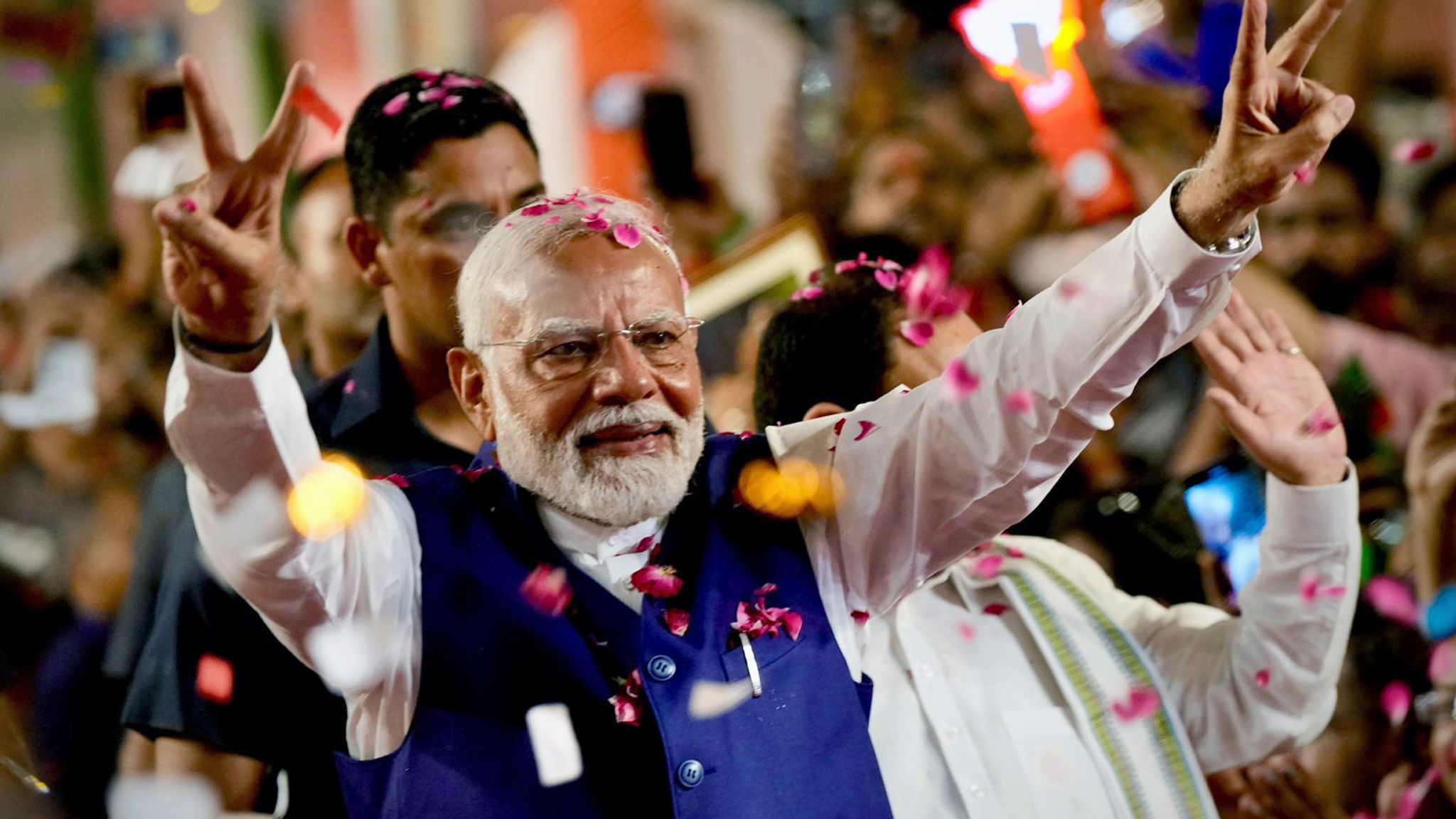
The Bharatiya Janata Party led by Narendra Modi has won power in West Bengal for the first time ever (YouTube [2]). Challengers beat incumbents in three out of four states, with BJP performing well in West Bengal alongside TVK in Tamil Nadu (Economic Times [3], [6]).
Why it matters
State election outcomes like Bengal's shift represent changes in politics at the regional level, but they do not alter the central government's administrative or legislative agenda. Indian stock markets are likely to ignore these results and instead focus on global geopolitical risks, particularly the West Asia conflict and its impact on crude oil prices, alongside corporate earnings which have been decent.
Key facts
- BJP wins power in West Bengal for the first time (YouTube [2], 2026-05-07).
- Markets to focus on West Asia conflict as state election dust settles (Economic Times [3], [6], 2026-05-07).
- Central government agenda largely unaffected by state results (Kotak Institutional Equities report via Economic Times [3], 2026-05-07).
Analysis
India's federal structure allows state-level political swings, such as the BJP's breakthrough in West Bengal—a long-time stronghold of rivals—to occur without derailing national priorities. This election cycle saw sharp swings across Kerala, Tamil Nadu, and West Bengal, yet brokerages like Kotak Institutional Equities emphasize that the 'macro calculus' now dominates. With an election-free corridor ahead, the central government can prioritize managing weakening macro indicators and long-term capacity building, insulated from regional volatility.
Geopolitically, the West Asia conflict overshadows domestic politics, as India relies heavily on imported oil and LPG supplies vulnerable to regional disruptions. Government briefings highlight risks to energy markets and supply chains (YouTube [4]), while investor attention shifts from polls to crude price volatility. Decent corporate earnings provide market support, but sustained tensions could amplify pressures on India's economy, underscoring how external shocks trump internal political realignments in shaping strategic focus.
What to watch
- Escalation in West Asia and its effects on India's oil import costs.
- Central government measures to address macro weakening during the election-free period.
- Market reactions to upcoming corporate earnings amid geopolitical turbulence.