Overview
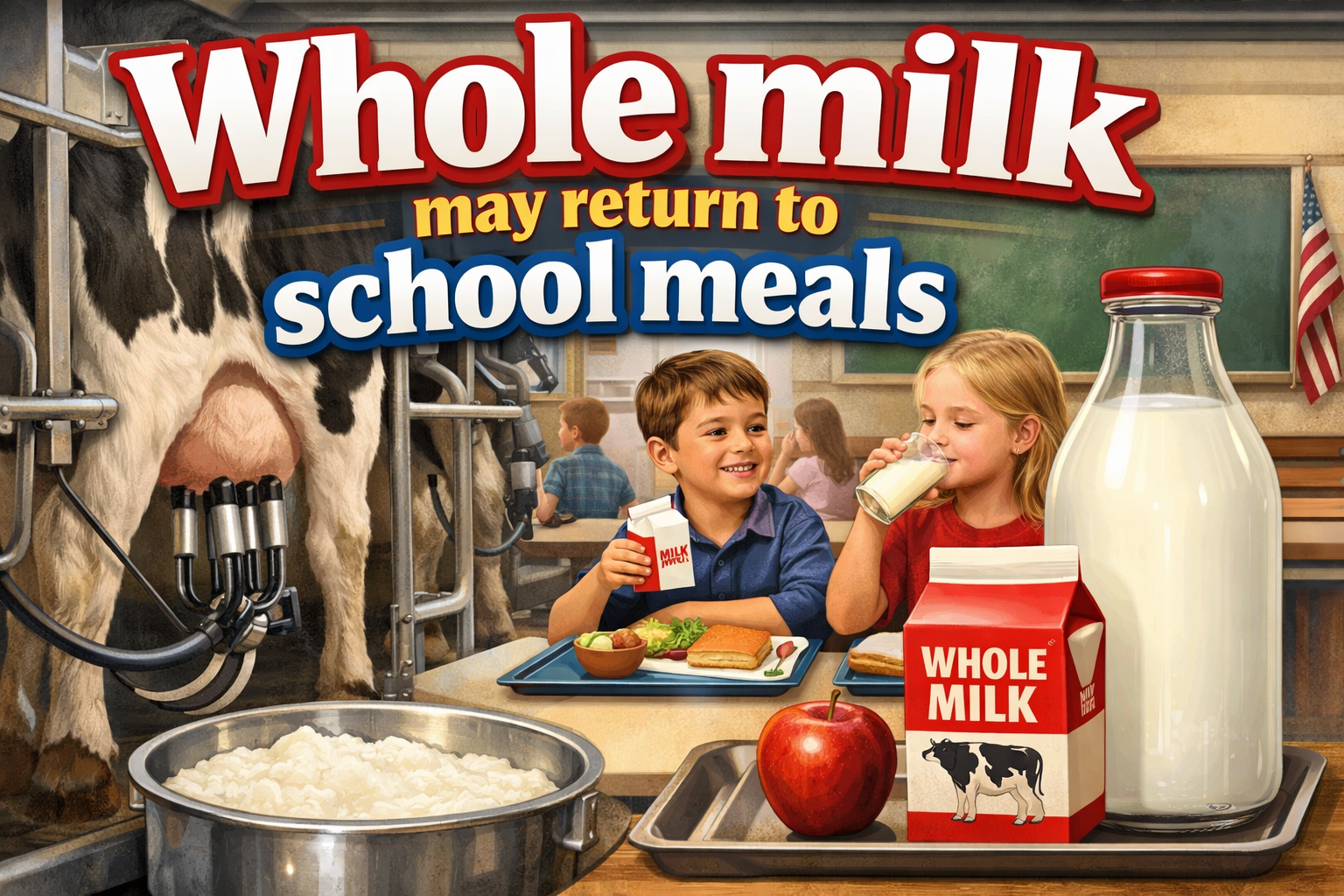
The House of Representatives passed the Whole Milk for Healthy Kids Act this week on December 17, 2025, paving the way for whole milk and reduced-fat milk to return to U.S. school cafeterias for the first time since 2012. Tucked into the bill is surprising language permitting non-dairy milk options that meet nutritional standards, such as fortified soy milk, and lowering the bar for parental requests from doctor's notes to simple parental notes.[1]
President Trump is expected to sign the measure into law soon, reshaping school nutrition policies amid debates over dairy industry benefits and child health. The bill follows Senate approval last month, marking a bipartisan push to expand milk choices in the National School Lunch Program.
Key Developments
- House passage occurred this week, with Senate approval in November 2025; schools can now stock whole milk, eliminated under the 2012 Healthy, Hunger-Free Kids Act signed by President Obama.[1]
- Non-dairy alternatives like fortified soy milk are now allowed if they match milk's nutrition profile; parental notes suffice for accommodations, no longer requiring doctor's approval.[1]
- Nutrition expert Erica Kenney, associate professor at Harvard T.H. Chan School of Public Health, remarked: “Everything’s just so weird these days,” highlighting the unusual pro-dairy and pro-non-dairy combo at 10:00 AM EST coverage.[1]
Analysis
| Factor | Current Status | Implications |
|---|---|---|
| Economic | Dairy industry gains $ millions in school contracts; non-dairy makers like soy producers benefit from easier access | Boosts rural US economies in Wisconsin, California dairy states; opens market for plant-based firms amid rising vegan demand |
| Political | Bipartisan support evades Congress constraints on RFK Jr.-style health reforms | Signals flexibility in nutrition policy under Trump admin, potential template for broader food freedom initiatives |
| Social | Parents gain easier opt-outs for lactose-intolerant kids; whole milk appeals to fat-avoidance critics | May improve calcium intake per dairy lobby claims, but experts warn of obesity risks from higher-fat options in cafeterias |
Expert Reactions
Erica Kenney from Harvard noted the bill's oddity: “Everything’s just so weird these days,” welcoming non-dairy ease but questioning dairy focus amid child obesity epidemics.[1] Dairy advocates hailed it as a victory for 'real milk' after 13 years of low-fat mandates.
What's Next
Schools can implement changes starting the 2026 academic year if signed by President Trump this month; USDA must issue guidelines by Q1 2026 on non-dairy standards compliance.