What happened
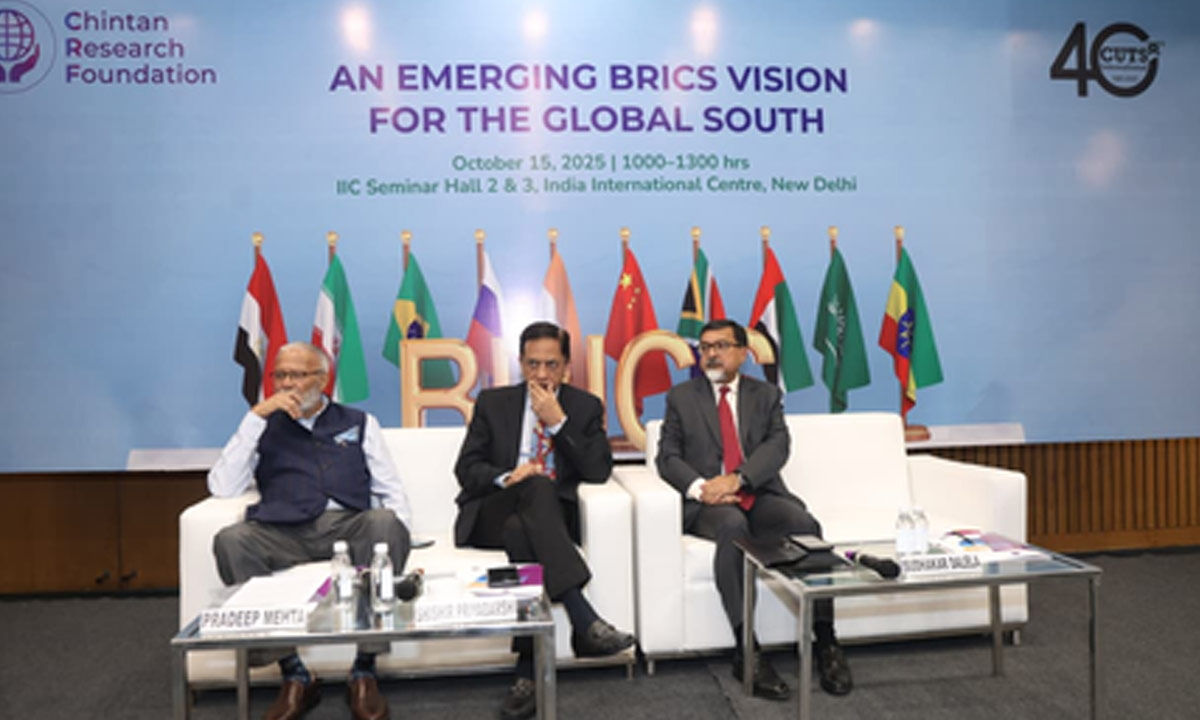
India has officially confirmed it will chair the BRICS bloc in 2026 and host multiple high-level meetings, including the BRICS Foreign Ministers' gathering, according to Ministry of External Affairs spokesperson Randhir Jaiswal (ANI, May 8, 2026). The confirmation comes as the expanded BRICS grouping—now including Brazil, Russia, India, China, South Africa, and newly admitted members—intensifies its positioning as a structural alternative to Western-dominated multilateral institutions.
Why it matters
India's BRICS chairmanship arrives at a pivotal inflection point in global order formation. The bloc's agenda signals a deliberate pivot away from dollar-centric trade architecture and Western institutional frameworks. With discussions centered on local currency settlements, de-dollarisation, energy security, and multipolar world order principles, New Delhi's stewardship reflects India's broader strategic calculus: leveraging non-aligned positioning to build economic resilience while maintaining strategic autonomy.
This chairmanship also intersects with India's concurrent shift toward long-term economic strategy. According to S&P Global analyst Deepa Kumar (Tribune India, May 7, 2026), India is transitioning from immediate crisis management to medium and long-term resilience-building anchored on two pillars: self-sufficiency in critical sectors and strategic diversification through alliances. BRICS provides a multilateral vehicle for both objectives—particularly through alternative payment mechanisms and energy cooperation that reduce dependency on Western-controlled systems.
Key facts
- India holds BRICS chairmanship in 2026 and will organize multiple engagements including Foreign Ministers' meeting (ANI, May 8, 2026)
- BRICS membership now includes Brazil, Russia, India, China, South Africa, plus newly expanded members (ANI, May 8, 2026)
- Agenda priorities include trade, local currency settlements, de-dollarisation, energy security, and multipolar order (ANI, May 8, 2026)
- India's strategic approach emphasizes self-sufficiency and diversification to counter geopolitical and economic risks (S&P Global, May 7, 2026)
Analysis
India's BRICS chairmanship represents more than ceremonial leadership; it signals New Delhi's deliberate positioning within an emerging counter-hegemonic coalition. The emphasis on de-dollarisation and local currency mechanisms directly challenges the post-1945 dollar-based settlement system that has anchored Western economic dominance. For India specifically, this offers dual benefits: it provides cover for rupee internationalization efforts while embedding New Delhi within a bloc that includes both Russia (under Western sanctions) and China (locked in strategic competition with the US). By hosting these meetings, India gains agenda-setting power over discussions that could reshape emerging-market trade flows and capital movements.
The timing amplifies significance. India's concurrent pivot toward long-term economic resilience—building self-sufficiency in critical sectors while diversifying partnerships—suggests New Delhi views BRICS not as a temporary coalition but as a structural pillar of its medium-term strategy. The bloc's expanded membership, while sometimes criticized for diluting cohesion, actually strengthens India's position by distributing decision-making authority beyond the original China-Russia axis. This allows India to exercise greater influence over outcomes while maintaining plausible deniability on contentious issues. The Foreign Ministers' meeting will likely become a venue for testing consensus on sanctions-evasion mechanisms, alternative trade corridors, and coordinated positions on Western-led initiatives in multilateral forums.
What to watch
- BRICS payment system rollout: Monitor whether India's chairmanship accelerates development of BRICS-denominated or rupee-linked settlement mechanisms that could fragment dollar-based trade networks in Asia-Pacific.
- Consensus on energy cooperation: Track whether BRICS meetings produce binding agreements on energy diversification (particularly non-Western oil/gas sources) that could reshape India's supply-side vulnerabilities in West Asia.
- India-China coordination dynamics: Observe whether India's chairmanship reveals tensions or alignment with China on BRICS priorities, signaling whether the bloc functions as genuine multipolar counterweight or Chinese-led instrument.