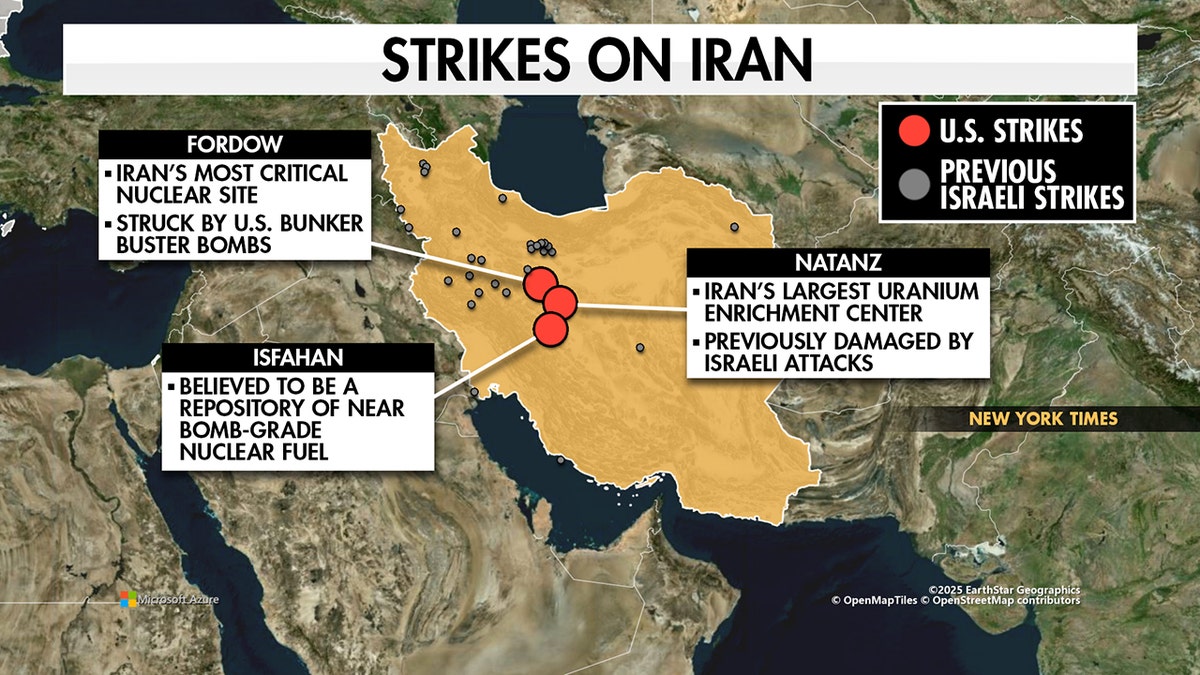
What happened
The United States launched airstrikes on Iranian military sites, as documented in a YouTube video from a credible outlet covering the event (YouTube, 'US Bombs Iranian Military Sites After IRGC Missiles & ...'). This action came directly after missiles fired by Iran's Islamic Revolutionary Guard Corps (IRGC) targeted interests aligned with US positions. The strikes represent a tit-for-tat escalation in the ongoing shadow conflict between the two nations.
Details from the coverage indicate the US response was precise, focusing on military infrastructure to degrade IRGC capabilities. No broader details on scope or immediate aftermath are specified beyond the initiation of these bombings, underscoring the rapid nature of the reprisal.
Why it matters
This incident inserts the United States directly into the vortex of Middle East hostilities, shifting from advisory or proxy engagements to overt military action. Iran's IRGC has long served as the vanguard of Tehran's regional ambitions, supporting militias across Iraq, Syria, Lebanon, and Yemen. US strikes challenge this network, potentially disrupting supply lines and command structures that have vexed Western interests for decades.
Economically, the timing heightens risks to global oil flows through key chokepoints like the Strait of Hormuz, where Iran holds sway. Any prolonged exchange could spike energy prices, forcing adjustments in US domestic policy and alliances with Gulf states. Structurally, it tests the post-2018 'maximum pressure' framework, revealing limits to deterrence when missile threats materialize against US assets.
Key facts
- US conducted bombings on Iranian military sites (YouTube, 2026-05-09).
- Strikes followed IRGC missile launches targeting related sites.
- Event covered under title 'US Bombs Iranian Military Sites After IRGC Missiles & ...'.
Analysis
The US decision to bomb Iranian sites reflects a doctrinal evolution under sustained pressure from IRGC provocations. Historically, Washington has relied on sanctions and cyber operations to counter Tehran, but direct kinetic responses signal a threshold crossed amid accumulating red lines. This move reinforces US credibility as a security guarantor in the region, particularly for Israel and Sunni Arab partners wary of Iranian encirclement. However, it risks entangling American forces in a multi-front quagmire, echoing patterns from 2019-2020 tanker crises and Soleimani's elimination. Broader strategic dynamics involve China's tacit support for Iran via oil purchases, complicating US efforts to isolate Tehran economically. The strikes may prompt Beijing to accelerate de-dollarization initiatives, leveraging the event to portray US aggression as destabilizing global trade.
Looking at alliance architectures, this escalation pressures NATO's southern flank, where European members grapple with energy dependencies on non-Russian sources. The US action underscores its role as the indispensable balancer, yet it exposes fissures: domestic war fatigue and fiscal strains limit sustained campaigns. Iran's asymmetric toolkit—drones, proxies, and ballistic missiles—ensures retaliation asymmetry, potentially drawing in Hezbollah or Houthis. This interplay elevates the Middle East as a fulcrum for great-power competition, where US resolve deters adventurism but invites hybrid countermeasures that erode deterrence over time. Ultimately, the bombings recalibrate the balance, affirming American primacy while inviting calculated Iranian pushback through non-conventional means.
What to watch
- Forecast: Iranian proxy activations in Iraq or Syria could test US base defenses within weeks.
- Forecast: Oil price surges above recent benchmarks if Hormuz transits face disruptions.
- Forecast: Gulf allies may request bolstered US naval patrols, signaling deeper alliance integration.