What happened
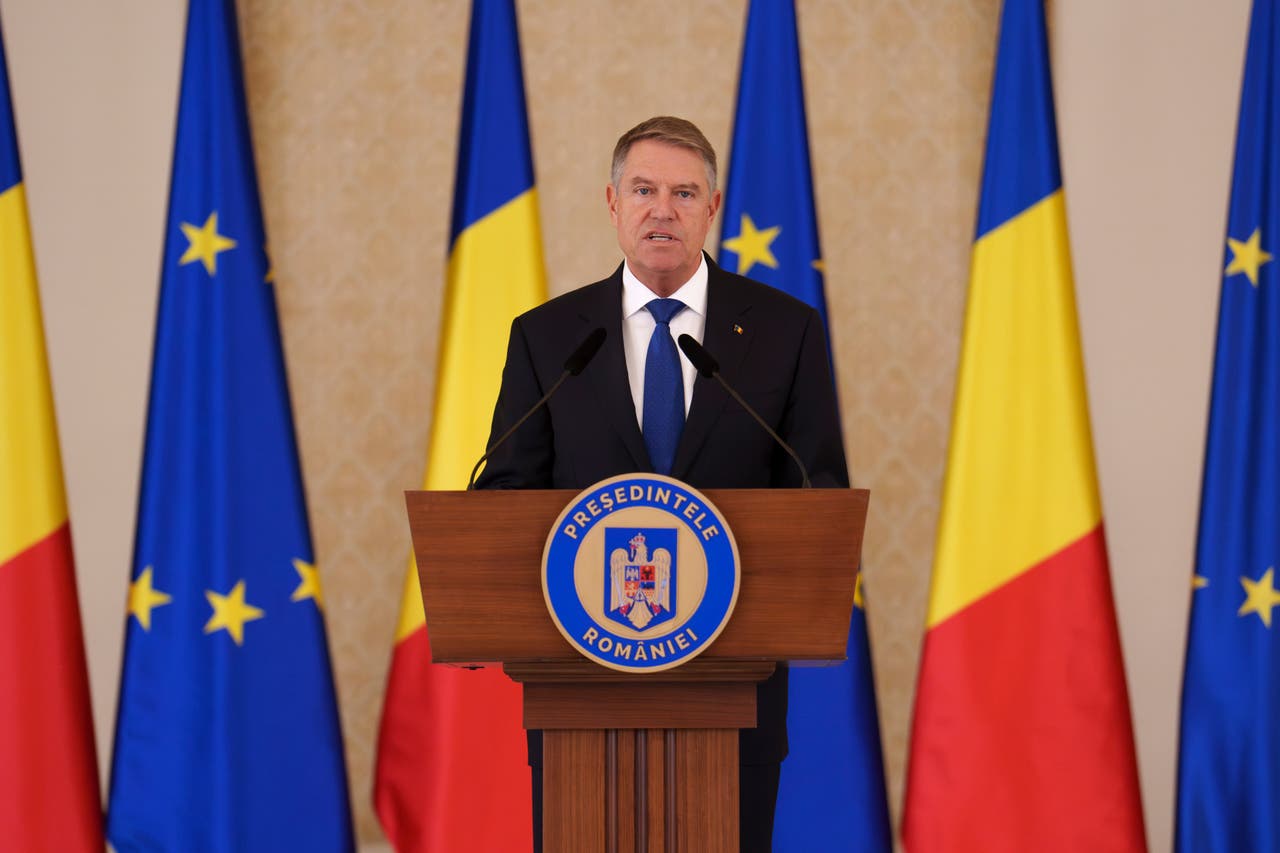
Romania's pro-European coalition government collapsed on Tuesday after Prime Minister Ilie Bolojan lost a no-confidence motion in Parliament, with 281 lawmakers voting in favour and only four against (Euronews, 2026-05-06). The coalition, which had been in place for less than a year, fractured after the leftist Social Democratic Party (PSD) withdrew in late April, enabling the hard-right opposition Alliance for the Unity of Romanians (AUR) to submit the motion that ultimately succeeded.
Why it matters
Romania's political instability arrives at a moment of acute European vulnerability. The continent faces a compounding crisis: the IMF has downgraded eurozone growth forecasts to just over 1% for 2026 (down from 1.4%), energy disruptions from the Iran conflict are tightening financial conditions, and the EU braces for potential U.S. tariff escalation on automotive exports. Within this environment, the collapse of a pro-EU coalition in a NATO and EU member state signals that domestic political fragmentation is accelerating even as external pressures mount. Romania's geopolitical positioning—balancing EU integration with historical ties to Russia—makes internal instability particularly consequential for European cohesion.
Key facts
- The coalition was sworn in less than a year before the no-confidence vote (Euronews, 2026-05-06)
- 281 lawmakers voted to remove PM Bolojan; only 4 voted against (Euronews, 2026-05-06)
- The PSD's withdrawal in late April preceded the motion filed by both PSD and AUR (Euronews, 2026-05-06)
- Romania remains a full EU and NATO member during this period of political transition (Euronews, 2026-05-06)
Analysis
The Romanian coalition's collapse exemplifies a broader pattern of EU institutional strain under crisis conditions. When external shocks—energy disruptions, tariff threats, geopolitical realignment—compress fiscal and political space, centrist coalitions become fragile. The involvement of the hard-right AUR in toppling the government suggests that populist and nationalist forces are exploiting economic anxiety to regain leverage. This mirrors dynamics seen across Central Europe, where anti-establishment parties have capitalized on inflation, energy insecurity, and perceived Brussels remoteness.
For Brussels, the timing is particularly acute. As the EU attempts to coordinate responses to Middle Eastern energy disruptions and prepare unified tariff countermeasures against Washington, internal political instability in member states erodes collective bargaining power. Romania's next government formation will test whether pro-EU forces can reconstitute a majority or whether the political center continues to fragment. The outcome will signal whether the EU's eastern flank remains stable enough to sustain the bloc's external posture during a period of compounding systemic stress.
What to watch
- Government formation dynamics: Whether a new pro-EU coalition can be assembled, or whether Romania enters a prolonged caretaker period that weakens EU coordination on energy and trade responses.
- AUR's leverage: Whether the hard-right party uses its kingmaker position to shift Romania's foreign policy orientation, particularly regarding EU-Russia relations or NATO commitments.
- Contagion risk: Whether political instability spreads to other Central European capitals already experiencing economic strain from energy costs and tariff uncertainty.