What happened
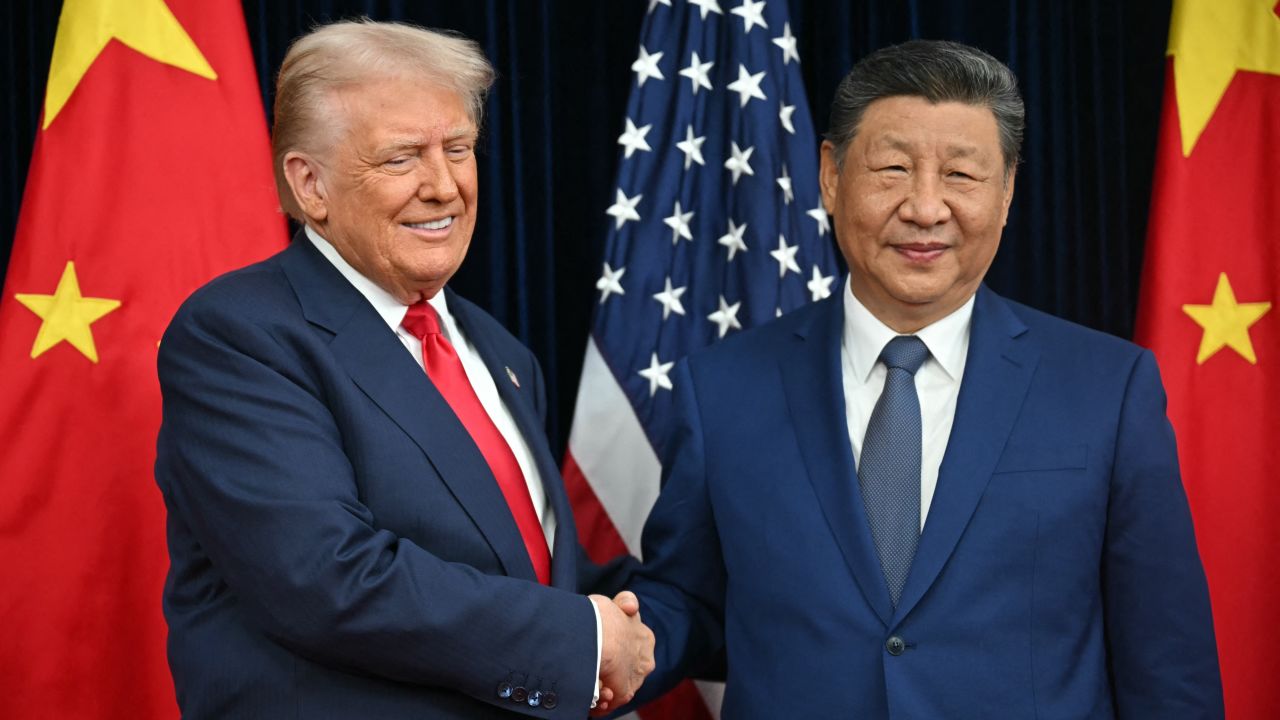
On Thursday, May 14, 2026, Chinese leader Xi Jinping welcomed U.S. President Donald Trump with a handshake in Beijing for a superpower summit addressing thorny issues including Iran, trade, and Taiwan (Instagram reel, 2026-05-14). Trump stated that the two countries should be “partners and not rivals” during their talks. This encounter follows earlier welcomes by Xi for discussions on these critical matters.
The New York Times reported that for Trump, the Iran War looms over the China summit, noting the balance of power between the United States and China had shifted in Beijing's favor even before the war in Iran began in February (NYT, 2026-05-13).
Why it matters
The US-China relationship forms the cornerstone of global geopolitics, influencing trade flows, technological competition, and military postures across Asia and beyond. With the Iran war disrupting energy markets and drawing US resources into the Middle East, Beijing has gained relative strategic breathing room to consolidate its positions in the South China Sea and along critical maritime routes. This summit underscores how regional conflicts can accelerate power diffusion away from Washington, forcing American leaders to recalibrate bilateral ties under duress.
Economically, the interplay of trade discussions amid wartime uncertainties amplifies risks for global supply chains. Canada's central bank deliberations highlight how US trade policies could ripple northward, potentially necessitating monetary adjustments, which in turn reflect broader anxieties about American economic leverage (Bank of Canada, 2026-05-14). Structurally, these dynamics reveal the fragility of US primacy when multipolar pressures from Beijing intersect with peripheral entanglements like Iran.
Key facts
- Xi Jinping welcomed Trump with a handshake on May 14, 2026, in Beijing for talks on Iran, trade, and Taiwan (Instagram reel, 2026-05-14).
- Trump called for the US and China to be “partners and not rivals” (Instagram reel, 2026-05-14).
- Balance of power shifted in China's favor before Iran war began in February (NYT, 2026-05-13).
- Canadian economy risks from US trade relations and Middle East war (Bank of Canada, 2026-05-14).
Analysis
This Trump-Xi summit arrives at a pivotal juncture where the Iran conflict has not only strained US military bandwidth but also enhanced China's geopolitical maneuverability. Pre-war shifts already favored Beijing through its economic resilience and Belt and Road expansions, but the February escalation in Iran has compounded American overextension. Trump's push for partnership signals an pragmatic acknowledgment that confrontation on multiple fronts—Middle East, Taiwan, trade—dilutes Washington's focus. Yet, underlying tensions persist, as Beijing leverages the distraction to deepen ties with Global South economies wary of US interventionism. The summit's emphasis on Iran reveals Tehran's role as a proxy battleground, where Chinese diplomatic forays could undermine US-led coalitions.
From a structural lens, this meeting exemplifies the transition to a bipolar world order strained by asymmetric commitments. The US, tethered to alliance obligations and energy security, faces a China unencumbered by similar Middle Eastern stakes, allowing Xi to project stability and economic partnership. Trade talks here are less about tariffs alone and more about recalibrating dependencies in semiconductors, rare earths, and renewables—sectors where Beijing holds leverage. Canadian policymakers' concerns over US trade restrictions further illustrate contagion effects, potentially fracturing North American economic unity and emboldening Chinese market penetration. Ultimately, the summit's outcomes could dictate whether US decline accelerates or if deft diplomacy restores equilibrium.
What to watch
- Forecast: Escalation in Iranian oil disruptions could prompt US concessions in trade negotiations to secure Chinese neutrality.
- Forecast: Taiwan-related breakthroughs or stalemates at the summit may foreshadow shifts in Indo-Pacific military deployments.
- Forecast: Post-summit US policy announcements on Iran could reveal the extent of Sino-American alignment or divergence.