What happened
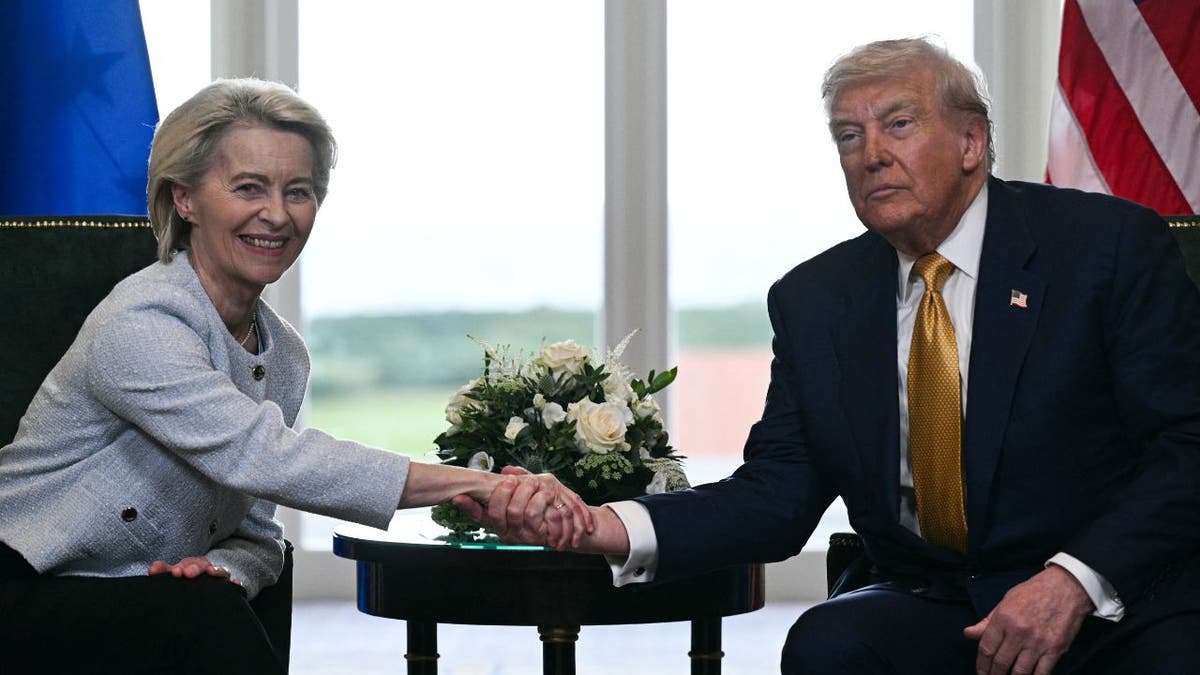
US President Donald Trump threatened tariffs on European Union goods, arguing that the EU has not fulfilled its obligations under the Turnberry Agreement struck at his golf course in Scotland. Under that deal, the US agreed to a maximum 15% tariff on EU goods while the EU committed to eliminating tariffs on US industrial products. German automakers face particular impact from these threats, interpreted as retaliation for German Chancellor Friedrich Merz's remarks on the Iran war (DW, 2026-05-10).
At the G7 summit closing press conference, French Trade Minister Nicolas Forissier framed the US threats as a push to accelerate Turnberry implementation. EU parliamentarians are now calling for safeguards in case the US fails to comply with the agreement.
Why it matters
The Turnberry Agreement represents a cornerstone of post-2016 US-EU trade relations, aiming to balance industrial goods flows amid broader transatlantic economic interdependence. Trump's revival of tariff threats underscores persistent asymmetries in compliance perceptions, where US industrial exports seek frictionless EU market access while protecting domestic sectors like autos from European competition. This dynamic amplifies vulnerabilities in supply chains, particularly for Germany's export-driven economy, which relies heavily on US markets for vehicles and components.
Geopolitically, such threats intersect with alliance strains, as seen in linkages to foreign policy divergences like Iran policy. They risk fragmenting G7 cohesion on trade, forcing EU members to navigate intra-bloc divisions—France pushing acceleration, Germany facing direct hits—while broader US dealmaking style pressures multilateral frameworks. Economically, escalation could disrupt € billions in bilateral trade, reinforcing Europe's push for strategic autonomy in commerce.
Key facts
- Turnberry Agreement: US max 15% tariff on EU goods; EU eliminates tariffs on US industrial products (DW, 2026-05-10).
- Threats target EU members including France, Germany, Italy, all G7 participants (DW, 2026-05-10).
- French Trade Minister Nicolas Forissier views threats as call to speed up deal (DW, 2026-05-10).
- EU parliamentarians demand US compliance safeguards (DW, 2026-05-10).
Analysis
Trump's tariff rhetoric reframes the Turnberry Agreement not as a settled pact but as a leverage point in ongoing US-EU negotiations, highlighting how personal diplomacy at venues like his Scottish golf course yields fragile outcomes. The linkage to Chancellor Merz's Iran comments reveals trade as a retaliatory instrument in geopolitical disputes, where economic pain targets electorally sensitive sectors like German autos. This approach exploits EU internal heterogeneity—unanimity requirements slow responses, allowing bilateral pressure on export powerhouses. For the EU, it accelerates debates on enforcement mechanisms, potentially hardening positions via parliamentarian safeguards that mirror US tactics.
Structurally, this episode underscores the erosion of WTO-centric trade norms under unilateral US pressure, pushing the EU toward 'union within a union' resilience as vetoes paralyze joint statements on global crises. Germany's outsized stake amplifies calls for federalist reforms to streamline trade policy, countering bloc-wide paralysis. Broader implications ripple to G7 summits, where trade frictions dilute collective bargaining power against non-Western economies, compelling Europe to weigh concessions against autonomy in industrial policy.
What to watch
- EU parliament's progress on Turnberry compliance safeguards, which could prompt reciprocal US tariffs.
- German automaker lobbying intensity, potentially swaying Chancellor Merz's US engagement.
- G7 follow-up statements on trade, gauging French acceleration efforts versus bloc-wide pushback.