What happened
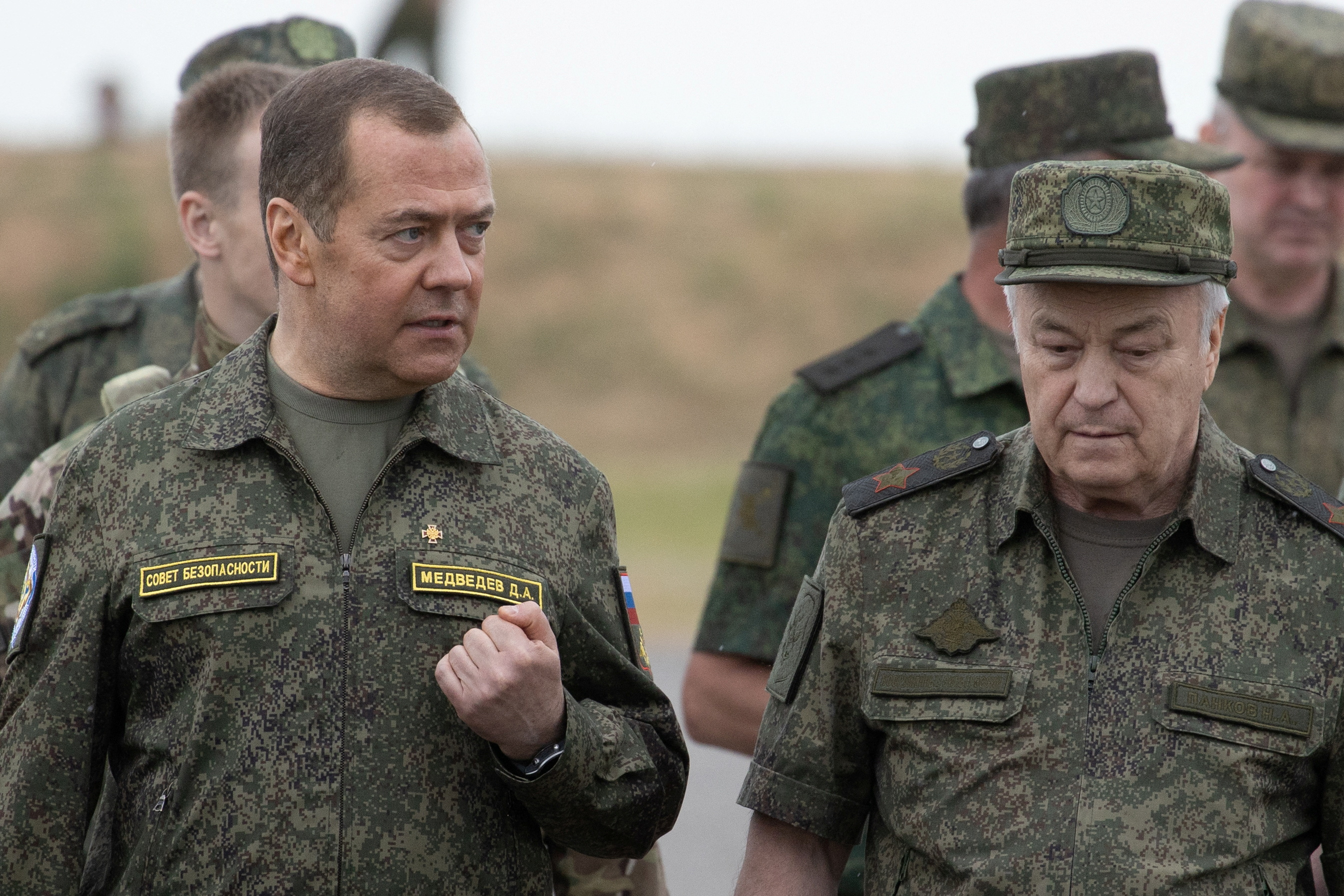
Dmitry Medvedev, deputy chairman of Russia's Security Council, warned Germany that moves toward nuclear armament or hosting massive NATO forces would trigger immediate retaliatory options from Moscow's strategic arsenal. He described Germany's preparations to serve as a logistical hub for up to 800,000 NATO troops as a direct path to nuclear escalation. These remarks, published in RT, slam Berlin's troop deployments near Belarus as historic provocations risking continental stability.
Medvedev's rhetoric revives Cold War fears, blending current geopolitics with historical grievances, while NATO's Joint Sustainment and Deployment Command outlines Germany's role as the primary bridgehead for rapid eastern flank reinforcements.
Why it matters
Europe's security architecture is undergoing profound stress tests, with NATO's forward posture directly challenging Russia's red lines in its near abroad. Germany's transformation from post-WWII pacifism to frontline NATO hub underscores a broader militarization trend, where economic powerhouse status now intersects with strategic vulnerability. This dynamic amplifies the fragility of deterrence balances, as Russian interpretations of NATO moves as offensive rather than defensive erode mutual restraint mechanisms built over decades.
The incident with drones entering Latvia from Russian airspace adds urgency, highlighting hybrid threats that blur peacetime and conflict thresholds across the Baltic region. Such events force NATO into constant readiness, straining resources and political cohesion among members.
Key facts
- Medvedev warns Germany's path risks "mutual destruction" and labels NATO troop plans a direct path to nuclear escalation (YouTube [1], 2026-05-07).
- Germany positioned as NATO's primary logistical bridgehead for up to 800,000 troops on eastern flank (YouTube [2], 2026-05-07).
- Two drones from Russian airspace crashed in Latvia, prompting NATO jets scramble and emergency alerts (YouTube [2], 2026-05-07).
- Medvedev slams Berlin’s deployments near Belarus as historic provocation (YouTube [1], 2026-05-07).
Analysis
Russia's nuclear saber-rattling directed at Germany represents a calculated escalation in information warfare, aimed at fracturing NATO unity by targeting Europe's economic core. By invoking 'total destruction' and 'retaliatory options,' Medvedev shifts the narrative from Ukraine's theater to Central Europe's heartland, exploiting Germany's domestic debates over military spending. This tactic leverages historical sensitivities—Germany's proximity to Russia and its WWII legacy—to amplify deterrence signaling. NATO's response, framed as precautionary, is recast by the Kremlin as long-term encirclement, with infrastructure builds near Belarus interpreted as irreversible commitment to confrontation. The result is a feedback loop where each side's reassurance measures fuel the other's threat perceptions, eroding arms control norms absent since Cold War treaties lapsed.
Compounding this, the Latvia drone incursion exemplifies Russia's hybrid playbook, testing NATO's Article 5 resolve without crossing kinetic thresholds. Crashes near borders, triggering school closures and fighter scrambles, normalize low-level intrusions that wear down alliance vigilance. For Germany, serving as sustainment command hub means absorbing frontline logistics burdens, potentially drawing it deeper into Baltic contingencies. Broader dynamics reveal Europe's eastern flank as the fulcrum of great-power competition, where NATO expansion meets Russian revanchism, and nuclear shadows lengthen over conventional disputes. Without de-escalatory channels, these frictions risk cascading into miscalculation, as deterrence relies on credible but ambiguous threats from both sides.
What to watch
- Forecasts: Heightened Russian hybrid activity along Baltic borders could prompt NATO's first peacetime invocation of enhanced forward presence reinforcements.
- Forecasts: German domestic pushback against troop hosting costs may slow NATO's logistical timelines, exposing alliance burden-sharing fractures.
- Forecasts: Medvedev-style rhetoric could intensify if NATO announces additional permanent rotations near Belarus, testing Europe's nuclear sharing debates.