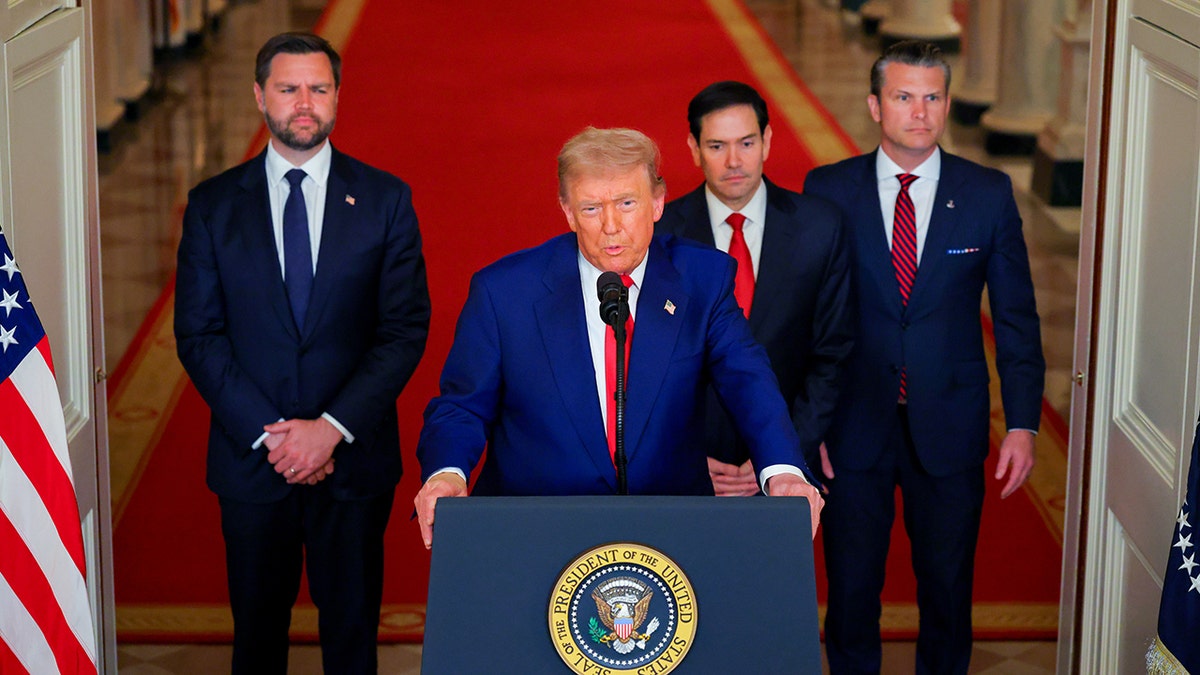
What happened
President Trump postponed a planned military strike on Iran that had been scheduled for May 19, according to the OSINT Newsroom report and corroborating reporting cited in related analysis. The same reporting says Gulf allies had asked for more time and that diplomatic discussions were continuing, while Iran submitted a revised 14-point proposal through Pakistan.
The U.S. publicly denied reports that it had agreed to lift oil sanctions during the talks, but it signaled openness to a long-term nuclear freeze, keeping the door open to a limited understanding rather than a full settlement. At the same time, oil markets reacted sharply to mixed signals and continued disruptions around the Strait of Hormuz.
Why it matters
This story matters because it shows how U.S. power in the Middle East is increasingly being exercised through timing, threat management, and alliance consultation rather than immediate military action. A postponed strike can be just as geopolitically significant as a strike itself: it changes bargaining leverage, reassures some regional partners, and gives mediators room to keep negotiations alive.
The deeper issue is the strategic centrality of the nuclear file and the Strait of Hormuz. Those two questions are tightly linked: the nuclear dispute is not only about enrichment and verification, but also about control, access, and regional freedom of action. When shipping lanes and energy flows are under stress, even a temporary pause in violence becomes a macro-strategic event, because it affects oil prices, alliance confidence, and the credibility of deterrence.
Key facts
- Trump postponed a planned military strike on Iran scheduled for May 19, citing Gulf requests and ongoing diplomatic talks. (OSINT Newsroom, 2026-05-19)
- Iran submitted a revised 14-point proposal via Pakistan focused on ending the war and building trust. (OSINT Newsroom, 2026-05-19)
- The U.S. denied agreeing to lift oil sanctions, while signaling openness to a long-term nuclear freeze. (OSINT Newsroom, 2026-05-19)
- Oil prices fluctuated sharply amid mixed signals and continued disruptions around Hormuz. (OSINT Newsroom, 2026-05-19)
- Related analysis says Trump’s envoys were working on a 14-point memorandum of understanding through Pakistani mediation, with the Strait of Hormuz and the nuclear program central to talks. (Atalayar, 2026-05-19)
Analysis
The immediate significance of the postponed strike is that it exposed a familiar but often misunderstood feature of U.S. Middle East strategy: coercion is most effective when it remains conditional. By holding back, Washington preserved the possibility of escalation without paying the full costs of war. That matters because Iran’s negotiating position is shaped not only by sanctions and military threats, but by its need to maintain internal cohesion and regional deterrence. A strike could have disrupted the talks; a delay keeps pressure alive while allowing intermediaries to work.
The second layer is the role of Gulf states and Pakistan as diplomatic and strategic intermediaries. Their involvement suggests that the region is not simply polarizing into a U.S.-Iran binary. Instead, middle powers are actively shaping outcomes, trying to prevent a broader confrontation that would threaten energy markets and regional infrastructure. The result is a more multipolar diplomatic environment in which Washington still matters greatly, but cannot fully dictate the tempo of escalation. That is especially important when the Strait of Hormuz is part of the discussion: any credible arrangement will have implications far beyond Iran, reaching into shipping security, insurance costs, and the strategic calculations of oil-importing states.
For the United States, the risk is that a temporary pause can look like flexibility without resolving the underlying problem. If talks stall, the same strike threat returns under worse conditions. If talks advance, Washington may be asked to accept a partial freeze rather than a comprehensive deal. Either outcome would reshape the regional balance. What this episode makes clear is that U.S. strategy in the Gulf is now being tested less by battlefield events than by its ability to synchronize military pressure, sanctions policy, and mediation through third parties.
What to watch
- Forecast: Whether Gulf mediation continues to delay any U.S. military action, indicating that regional partners still have leverage over Washington’s escalation choices.
- Forecast: Whether Iran’s revised proposal is translated into a narrower technical understanding or stalls over sanctions relief and nuclear constraints.
- Forecast: Whether further shipping disruption around Hormuz reignites market panic and hardens political pressure on the White House to reassert deterrence.
Source note
Primary source used: OSINT Newsroom report on May 19, 2026, with contextual corroboration from Atalayar’s May 19 geopolitical analysis.