What happened
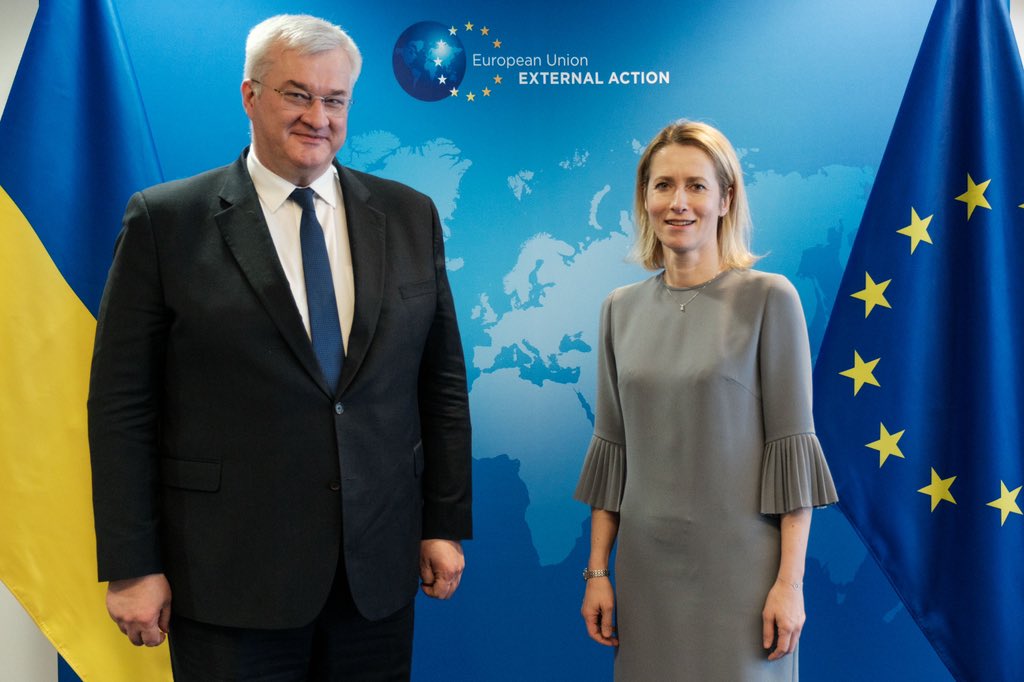
EU High Representative Kaja Kallas chaired the Foreign Affairs Council in Brussels where ministers discussed Ukraine’s accession process (EEAS, 2026-05-12). Kallas highlighted Ukraine's remarkable reform progress despite wartime challenges and called for opening all negotiation clusters before summer. She positioned EU membership for Ukraine not as charity but as an investment in the bloc's own security.
The meeting also covered Russia's war in Ukraine, with focus on continued military and political support, sanctions policy, and diplomatic coordination (YouTube [4], 2026-05-12).
Why it matters
Ukraine's potential EU integration alters the post-Soviet geopolitical map, locking in European orientation for a key Black Sea state and countering Russian influence in Eastern Europe. This move accelerates the bloc's eastward expansion, building on recent NATO enlargements like Finland and Sweden, while addressing vulnerabilities such as the Suwałki Gap—a narrow land corridor vital for Baltic connectivity to the rest of the EU. Amid Russia's demands for Ukrainian withdrawal from Donbas as a negotiation precondition, the EU's accession push hardens negotiating lines and incentivizes reforms under duress.
Structurally, it intertwines enlargement with hard-power development across Europe, spurred by Russian aggression and uncertainties in transatlantic ties. As NATO's eastern flank—nations with heavy Russian-speaking populations—fears heightened exposure, Ukraine's EU trajectory reinforces a contiguous Western bloc, diminishing Moscow's leverage in the former Soviet space where it already cedes ground to competitors like China and Turkey.
Key facts
- EU ministers discussed opening all Ukraine negotiation clusters before summer (EEAS, 2026-05-12).
- Ukraine described as making 'remarkable reform progress' under difficult circumstances (EEAS, 2026-05-12).
- Kallas: 'Getting Ukraine into the EU is not charity, it is an investment into our own security' (EEAS, 2026-05-12).
- Russia conditions talks on Ukraine's Donbas withdrawal, including unseized areas (CFR, 2026-05-12).
- Suwałki corridor noted as Baltic states' sole EU land link, between Kaliningrad and Belarus (El País, 2026-05-12).
Analysis
The EU's accelerated Ukraine accession talks represent a pivotal shift from humanitarian aid to institutional fusion, embedding Kyiv within Brussels' legal and economic frameworks. This builds momentum from Ukraine's reform strides, even amid invasion, signaling to Moscow that territorial grabs won't derail Western integration. Russia's Victory Day rhetoric, demanding Donbas concessions upfront, underscores its stalled advances and isolation, as Europe forges hard-power tools absent for decades. Finland and Sweden's NATO pivot exemplifies this trend, with anti-Russian consolidation now extending to EU structures. For NATO's eastern flank, where Russian speakers comprise 97% of some populations, Ukraine's EU path fortifies the alliance's soft underbelly, mitigating destabilization risks around chokepoints like Suwałki.
Broader dynamics reveal Russia's eroding periphery: losses in the South Caucasus to US-Turkey influence, China's Central Asia dominance, and Moldova's European drift compound the Ukraine front's pressure. Kallas's framing as 'security investment' justifies enlargement costs, aligning with sanctions expansions—such as those targeting Iran-linked navigation obstructions—into a cohesive deterrence posture. This counters Putin's negotiation intransigence, positioning the EU as a gravitational pole that outpaces Russia's coercive diplomacy, while fostering intra-bloc unity on support packages.
What to watch
- Progress on opening EU negotiation clusters with Ukraine before summer, as a test of member state consensus.
- Russian responses to EU sanctions and Ukraine talks, potentially escalating hybrid threats on eastern borders.
- Baltic states' advocacy for Suwałki fortifications amid any US commitment shifts.