What happened
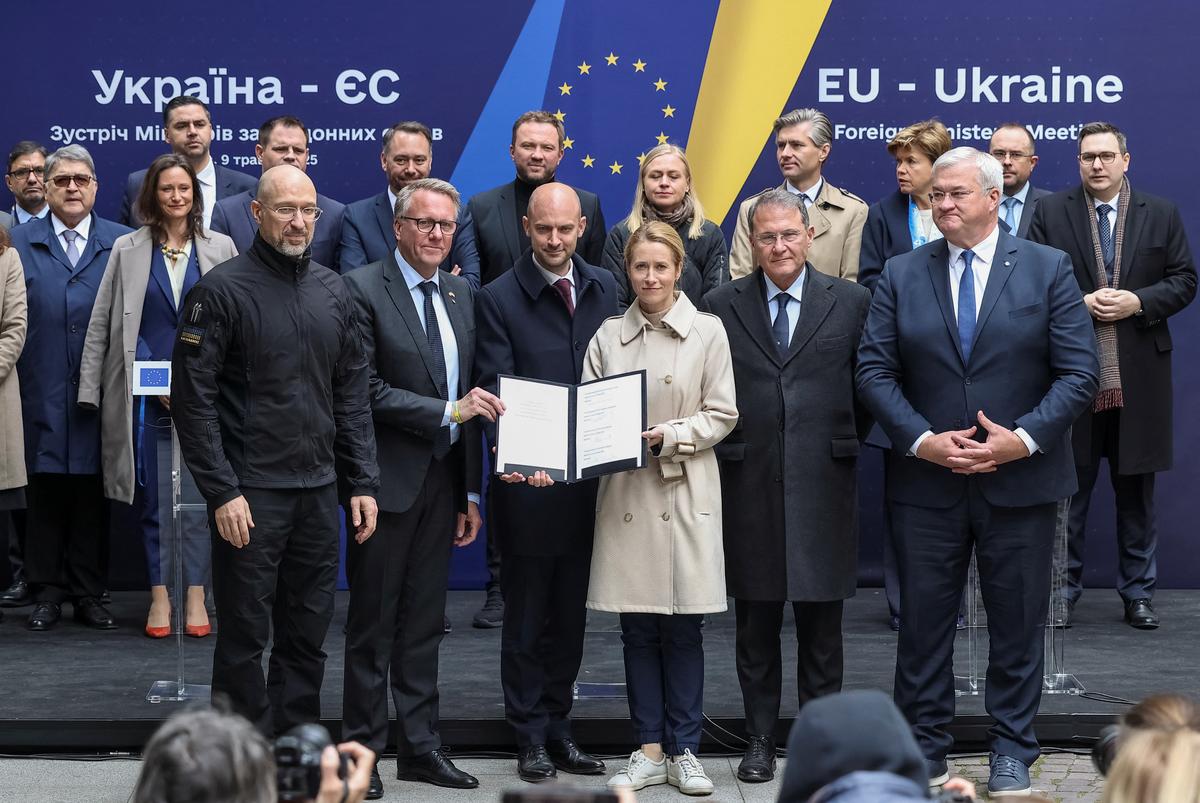
European Union foreign ministers gathered in Brussels for a Foreign Affairs Council meeting chaired by EU foreign policy chief Kaja Kallas to address the escalating Ukraine conflict and rising regional tensions. According to multiple reports from the meeting, discussions centered on continued military and political support for Ukraine, sanctions against Russia-linked individuals, and broader security challenges facing Europe, including Iran tensions and Middle East maritime security.
Why it matters
The Brussels meeting represents a critical juncture for EU cohesion on its eastern flank. With the Ukraine conflict now in its third year of major escalation, the EU faces compounding pressures: sustaining military aid commitments while managing economic costs, maintaining sanctions regimes despite divergent member-state interests, and coordinating diplomatic strategy across 27 capitals. The inclusion of Iran tensions and Syria engagement on the agenda signals that European security challenges are no longer compartmentalized—Ukraine, the Middle East, and broader strategic autonomy concerns now form an integrated crisis complex that demands unified EU positioning.
Kallas's leadership of these talks carries particular weight. As the EU's chief diplomat, her framing of the agenda and tone-setting on key issues will influence how member states calibrate their individual foreign policies. The packed agenda—spanning Ukraine, sanctions, Western Balkans enlargement, maritime security, and Iran diplomacy—underscores the EU's attempt to project strategic depth despite resource constraints and internal divisions.
Key facts
- The Foreign Affairs Council meeting was chaired by Kaja Kallas, EU foreign policy chief (DRM News, May 11, 2026)
- Agenda items included continued military and political support for Ukraine, sanctions on Russia-linked individuals, Western Balkans enlargement, Middle East maritime security, Syria engagement, and Iran diplomacy (YouTube/Foreign Affairs Council coverage, May 11, 2026)
- Discussions focused on presenting a united EU strategy on global conflicts amid growing geopolitical uncertainty (DRM News, May 11, 2026)
- The meeting addressed broader security challenges facing Europe and diplomatic coordination with allies (DRM News, May 11, 2026)
Analysis
The breadth of the Brussels agenda reflects a fundamental shift in how the EU now conceptualizes its security environment. The traditional compartmentalization of regional crises—treating Ukraine as a European problem, Iran as a Middle Eastern one—has collapsed into a unified threat perception. This integration is partly structural: sanctions on Russia create secondary effects in energy and commodity markets that ripple through Middle Eastern geopolitics; Iranian drone and missile technology flows to Russian forces in Ukraine; maritime security in the Middle East directly affects European trade routes and energy security.
Yet the meeting also exposes persistent EU vulnerabilities. Kallas must navigate significant internal disagreements on the intensity and duration of Ukraine support, the scope of sanctions regimes, and the degree to which the EU should pursue independent strategic autonomy versus deeper NATO integration. Hungary's historical resistance to Russia sanctions, Poland's competing security priorities, and France's occasional diplomatic overtures toward Russia all complicate the "united strategy" that DRM News reports the EU is attempting to present. The inclusion of Western Balkans enlargement on the agenda suggests the EU is also attempting to maintain forward momentum on its own institutional expansion even as it manages acute security crises—a balancing act that requires careful diplomatic choreography.
The focus on Iran tensions and maritime security indicates that the EU is also responding to perceived threats from non-state actors and regional powers beyond Russia. This suggests a recalibration of European threat assessment: no longer is Russia the sole focus, but rather a multipolar security environment in which Iran, proxy networks, and maritime disruption pose distinct challenges requiring distinct diplomatic and military responses. Kallas's role in synthesizing these concerns into a coherent EU position will determine whether the bloc can maintain strategic coherence or whether it fragments into bilateral responses by individual member states.
What to watch
Sanctions coordination outcomes: Monitor whether the Foreign Affairs Council produces concrete new sanctions on Russia-linked individuals or entities, or whether member-state divisions delay or dilute measures. This will signal the EU's actual capacity for unified action versus rhetorical commitment.
Ukraine military aid pledges: Track whether the meeting produces renewed or expanded commitments to military support for Ukraine, or whether member states begin signaling fatigue. Any divergence between public statements and private commitments would indicate fracturing EU consensus.
Iran diplomatic track: Observe whether the EU pursues independent diplomatic channels on Iran or defers to US-led initiatives. This will reveal the EU's appetite for strategic autonomy in Middle Eastern affairs versus alignment with broader Western policy.