What happened
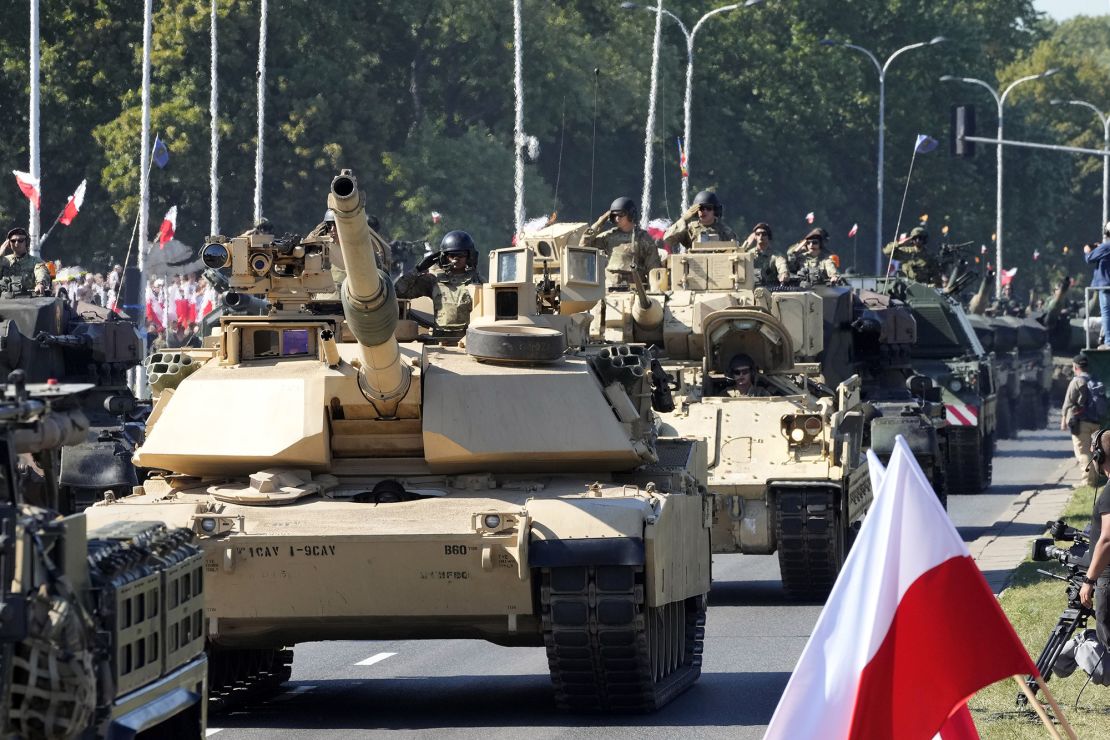
Poland has initiated a comprehensive military procurement program acquiring Abrams tanks, K2 Black Panthers, HIMARS systems, F-35 fighter jets, Apache helicopters, and Patriot air defense systems in a single acquisition cycle. Warsaw is simultaneously drawing approximately $1 billion in EU safe loans between 2026 and 2030 for artillery, cyber security, and ground combat systems, with funding tied to European, Polish, and Ukrainian component requirements (Breaking Defense, 2026-05-09).
Why it matters
Poland's accelerated militarization represents the most significant rearmament in Eastern Europe since NATO's post-2014 enlargement. The scale and speed of procurement—combining heavy armor, air power, and integrated air defense—indicates Warsaw perceives an acute and sustained threat environment. The EU financing mechanism and explicit Ukrainian component integration signal that Poland is positioning itself as both a frontline deterrent and a logistics hub for potential broader European security commitments. This spending trajectory challenges the EU's historical reliance on burden-sharing with the United States and suggests member states are independently hedging against American strategic unpredictability.
Key facts
- Poland procuring Abrams tanks, K2 Black Panthers, HIMARS, F-35s, Apache helicopters, and Patriot systems in coordinated procurement sprint (Breaking Defense, 2026-05-09)
- EU safe loans totaling ~$1 billion allocated for 2026–2030 defense expansion (Breaking Defense, 2026-05-09)
- Funding explicitly tied to European, Polish, and Ukrainian component requirements, indicating integrated supply chain strategy (Breaking Defense, 2026-05-09)
- Systems span air defense, ground combat, artillery, and cyber domains, suggesting comprehensive modernization rather than targeted capability gaps
Analysis
Poland's military expansion must be contextualized within three overlapping strategic pressures. First, the persistent Ukraine conflict has eliminated any residual ambiguity about Russian intentions in Eastern Europe. Poland shares a 418-kilometer border with Belarus—a Russian client state—and faces direct exposure to potential escalation. Second, Warsaw has historically harbored skepticism about NATO's credibility as a collective defense guarantee, particularly given the Trump administration's transactional approach to alliance commitments. By unilaterally accelerating defense spending, Poland signals that it cannot rely solely on Article 5 deterrence and must build autonomous strike and defensive capacity.
Third, the financing structure reveals a critical shift in EU strategic autonomy. Rather than waiting for Brussels-coordinated defense initiatives, Poland is leveraging EU financial instruments to accelerate procurement while explicitly integrating Ukrainian industrial capacity. This approach serves dual purposes: it strengthens Poland's own deterrent posture while simultaneously binding Ukraine's defense-industrial base to Western European supply chains. The emphasis on ground combat systems (Abrams, K2) and air defense (Patriot) suggests Warsaw is preparing for sustained conventional conflict scenarios rather than rapid NATO intervention. The integration of cyber security funding alongside kinetic systems indicates recognition that future conflicts will span both physical and digital domains. Poland's strategy implicitly rejects the assumption of rapid American reinforcement and instead positions the country as a self-sufficient regional power capable of absorbing initial Russian pressure while NATO mobilizes.