What happened
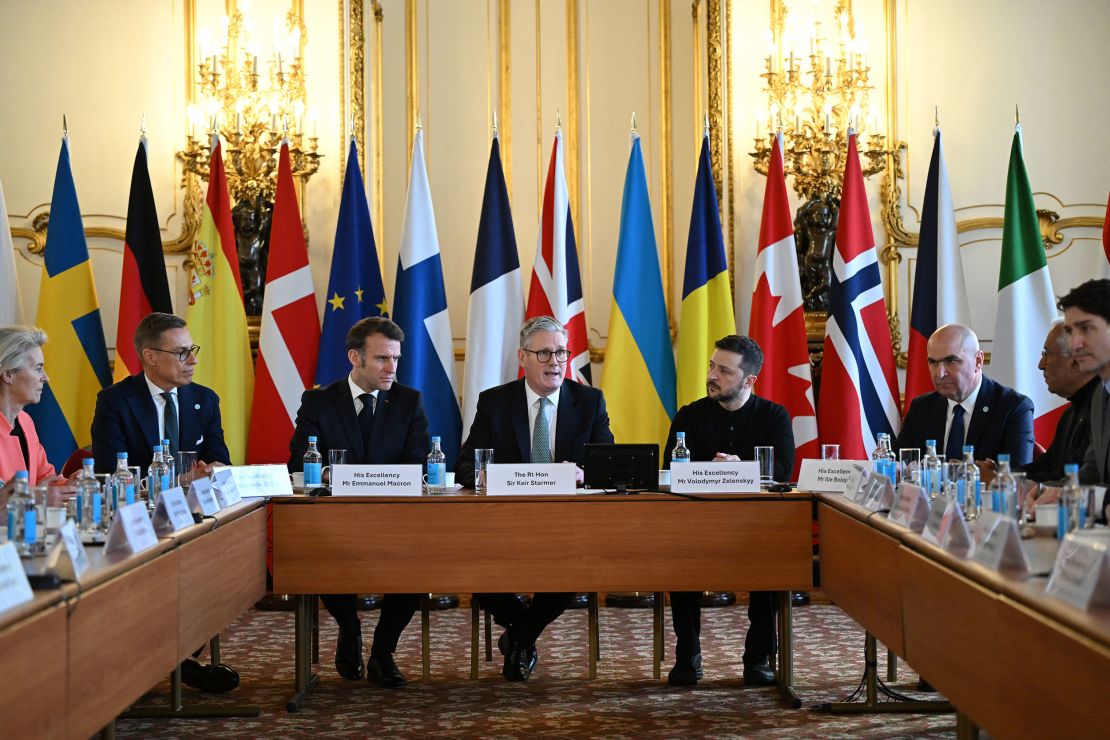
European policymakers have begun articulating the war in Ukraine as fundamentally a conflict between Russia and Europe itself, rather than a bilateral dispute. According to analysis from the Brookings Institution, "the Russian war against Ukraine is understood in Europe as a war not only against Ukraine, but against Europe and the West," with Ukraine positioned as "the central frontline between the aggressor (and his allies) and a Europe defending itself." This reframing coincides with German Defense Minister Boris Pistorius's unveiling of the first comprehensive military doctrine issued by Germany since the Cold War, which identifies Russia as the main threat to European security and warns that Moscow is "laying the groundwork for a military attack on NATO member states."
Why it matters
This cognitive shift—treating Ukraine as Europe's primary security boundary rather than a neighboring conflict—signals a fundamental restructuring of European strategic priorities. For decades, European security architecture assumed U.S. leadership and nuclear deterrence. The convergence of U.S. troop reductions in Germany, Spain's refusal to grant U.S. military base access for Iran operations, and Germany's explicit ambition to build Europe's strongest conventional military by the mid-2030s suggests the continent is preparing for a future in which it cannot rely on American security guarantees. Ukraine's status as "the main force of resistance" against Russian expansion has become the organizing principle for European defense planning.
This also intersects with Germany's broader push to centralize EU decision-making—the six-point reform proposal to replace unanimity voting in foreign policy with qualified majority voting. A more unified EU decision-making structure, combined with a militarized Germany and a NATO increasingly led by European members, would represent a historic reorientation of European geopolitics.
Key facts
- Germany's new military doctrine identifies Russia as the primary threat and aims to field roughly 460,000 troops—including over 200,000 active-duty personnel—by the mid-2030s, focused on reinforcing NATO's eastern flank (VPM/NPR, 2026-05-08)
- The Pentagon announced plans to withdraw approximately 5,000 U.S. service members from Germany, representing about 14% of the roughly 36,000 troops stationed there since the Cold War (VPM/NPR, 2026-05-08)
- Spain has refused to allow U.S. military base access in southern Spain for operations related to the U.S.-Israel war in Iran (VPM/NPR, 2026-05-08)
- European analysts now frame Ukraine as "the central frontline between the aggressor (and his allies) and a Europe defending itself" (Brookings, 2026-05-08)
- Russian President Vladimir Putin is reported to be eyeing territorial expansion in coming years, creating an existential threat perception across the continent (Euronews, 2026-05-08)
Analysis
The European security establishment's reframing of Ukraine as Europe's own war reflects a strategic awakening to the limits of post-Cold War assumptions. For three decades, European nations—particularly Germany—outsourced security to NATO and the United States, allowing defense budgets to atrophy and military capabilities to decline. The Ukraine conflict, combined with visible American retrenchment (troop withdrawals, reduced commitment to European bases, focus on Iran and Indo-Pacific competition), has forced a reckoning: Europe must prepare to defend itself against a Russia that has demonstrated willingness to wage large-scale conventional warfare on the continent's doorstep.
Germany's military doctrine and force-building ambitions are the most concrete manifestation of this shift. A German military of 460,000 troops would make Berlin the military anchor of European defense—a role historically reserved for the United States. This rearmament, coupled with Germany's simultaneous push to streamline EU decision-making by eliminating veto power in foreign policy, suggests Berlin envisions a more integrated, autonomous European security architecture. The parallel withdrawal of U.S. troops and refusal by allied nations (Spain) to support American operations in other theaters creates a strategic vacuum that European institutions are now positioned to fill. Ukraine's status as the "main force of resistance" against Russian aggression has become the legitimating narrative for this European military and political consolidation.
However, this transition carries significant risks. A Europe increasingly responsible for its own defense, without the stabilizing presence of American forces and nuclear guarantees, could trigger miscalculation with Russia or internal divisions over burden-sharing. The success of Germany's EU reform proposals—which would weaken smaller member states' veto power—remains uncertain and could generate backlash from nations concerned about losing influence in a more centralized structure. The geopolitical logic is clear: Europe sees Ukraine as its own war and is mobilizing accordingly. Whether that mobilization can be sustained politically and militarily over the decade-long timeframe Germany's doctrine implies remains an open question.
What to watch
- German military spending trajectory: Monitor whether Berlin sustains the investment levels required to field 460,000 troops by 2035, and whether other EU members match German rearmament proportionally or create a two-tier European defense structure.
- EU institutional reform outcomes: Track the fate of Germany's six-point proposal to replace unanimity voting in foreign policy. Success would represent a fundamental shift in EU decision-making power; failure would suggest member states remain unwilling to cede sovereignty even in the face of Russian threats.
- Russian military posture along NATO borders: Watch for indicators of whether Putin's reported territorial ambitions extend beyond Ukraine to NATO members, which would either validate or undermine the European threat perception now driving defense planning.