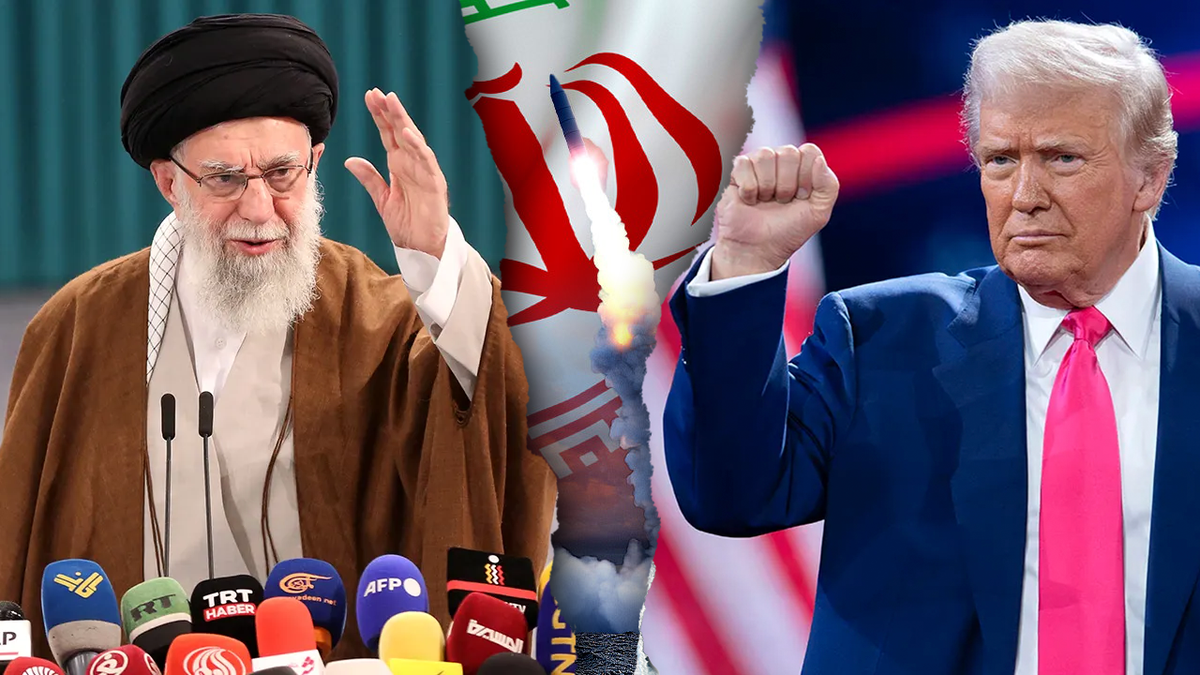
What happened
Reuters reported that President Donald Trump is preparing to decide whether to accept a proposed ceasefire-extension framework with Iran that would prolong the truce, reopen the Strait of Hormuz to unrestricted and toll-free navigation, and begin nuclear negotiations.[2] The Financial Times, as summarized in the Mackinder Forum bulletin, said Trump was heading toward a “final determination” on the same framework, while AP reported that a Situation Room meeting ended without a final presidential decision.[2]
The same bulletin said AP also reported new U.S. sanctions on Iran’s newly created Persian Gulf Strait Authority, the body Tehran set up to approve transit through Hormuz and charge tolls of up to $2 million per vessel.[2] The Reuters and AP accounts point to a U.S. policy that is still moving on two tracks at once: trying to reduce immediate maritime risk while keeping economic pressure on Tehran.[2]
Why it matters
The story matters because it shows the Strait of Hormuz remains a central lever in U.S. Middle East strategy, even after weeks of war and repeated escalation. Hormuz is not only a shipping lane; in this episode it is being used as a bargaining chip, a sanctions target, and a symbol of who can define the terms of regional de-escalation.[2][3]
That gives Washington a narrow but important form of leverage. If the United States can tie safer passage to a ceasefire and nuclear talks, it can convert military pressure into diplomatic structure. If it cannot, the region remains exposed to political timing risk, especially for energy flows and for the credibility of any U.S.-led security guarantee around maritime access.[2]
Key facts
- Reuters said Trump is weighing a framework that would extend the ceasefire, reopen Hormuz to unrestricted and toll-free navigation, and launch nuclear talks.[2]
- AP reported that a Situation Room meeting ended without a final decision from Trump.[2]
- The Mackinder Forum bulletin said the Financial Times described Trump as preparing a “final determination” on the proposal.[2]
- AP also reported U.S. sanctions on Iran’s Persian Gulf Strait Authority and on anyone cooperating with it.[2]
- Britannica’s account of the 2026 Iran war says the United States and Iran agreed on a ceasefire on April 7–8, after more than five weeks of fighting.[5]
- Britannica also says U.S. forces undertook an operation on May 4 to guide vessels stranded in the Persian Gulf through the strait.[5]
Analysis
The immediate significance of the current U.S. debate is that Washington is no longer treating Hormuz only as a military problem. It is treating access through the strait as a negotiating instrument that can be exchanged for de-escalation and nuclear talks. That is a notable shift in strategic framing. Rather than trying to secure the waterway solely through coercion, the administration appears to be testing whether transit rules themselves can become the basis for a broader political settlement.[2][3]
That approach has limits. The AP-reported sanctions on the Persian Gulf Strait Authority suggest Washington is still unwilling to concede the principle that Tehran can regulate or tax passage through Hormuz.[2] At the same time, the Reuters-described proposal implies that the White House sees some value in sequencing: first stabilize shipping, then move into nuclear talks.[2] That sequencing reflects a broader geopolitical reality. In the Gulf, maritime security, sanctions enforcement, and diplomacy are no longer separate policy tracks; they are part of the same bargaining system.
The deeper structural issue is credibility. If the United States signals that safe passage is contingent on negotiations, regional actors may read that as a new form of conditional security rather than unconditional protection. If it rejects the framework, it risks leaving open a cycle in which Iran can keep using maritime disruption to extract attention and concessions.[2] The result is a contest over who sets the rules of regional commerce: a U.S.-backed order built on freedom of navigation, or an Iranian effort to turn chokepoints into instruments of state power.[2][5]
What to watch
- Forecast: Whether Trump issues a final decision on the ceasefire-extension framework and, if so, whether it links shipping access explicitly to nuclear talks.[2]
- Forecast: Whether U.S. sanctions on Iran’s strait authority are followed by broader secondary measures against entities cooperating with Tehran’s transit regime.[2]
- Forecast: Whether shipping through Hormuz normalizes in practice or remains subject to intermittent political risk even if a ceasefire holds.[2][5]