What happened
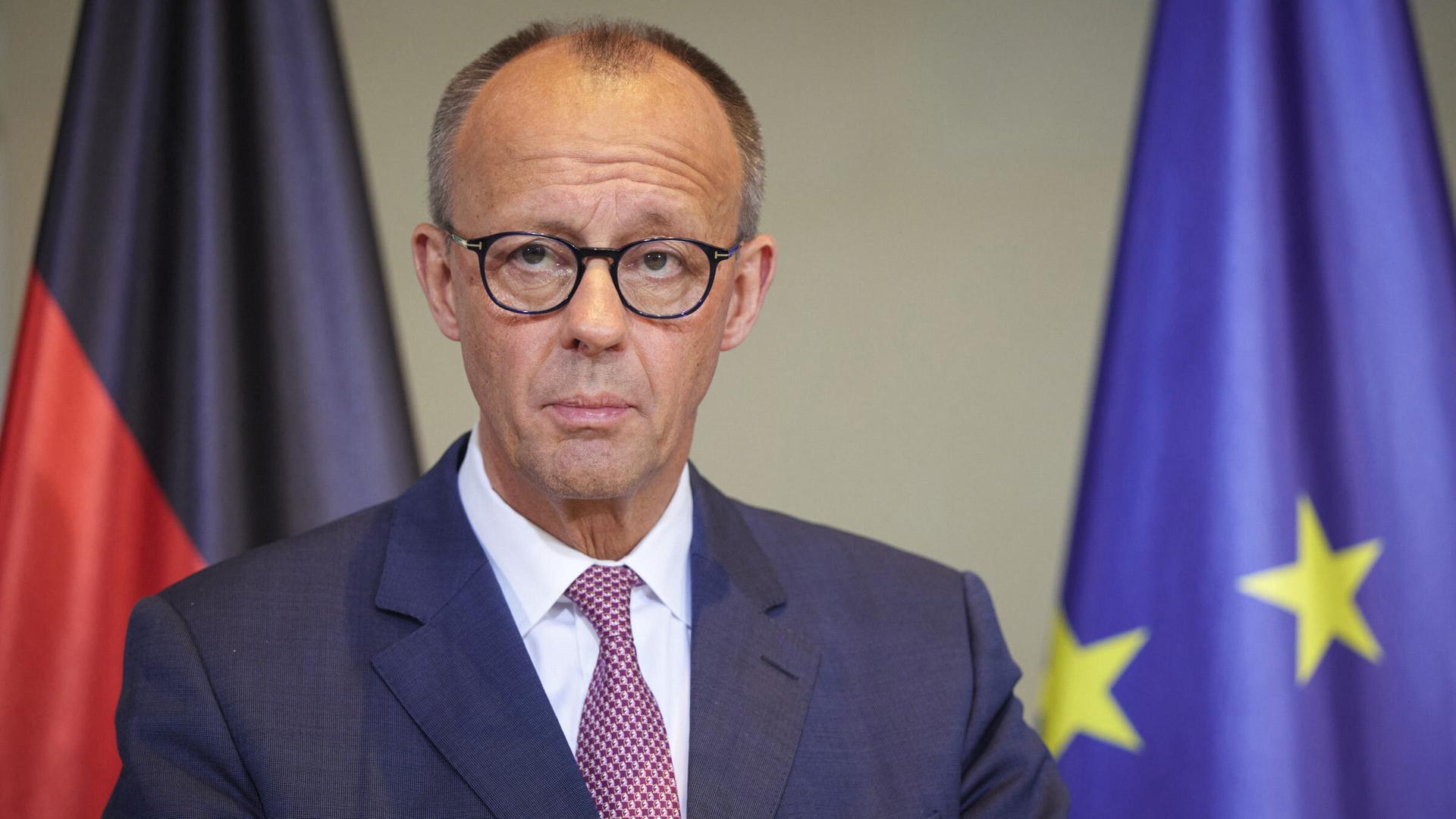
German Chancellor Friedrich Merz reiterated his opposition to issuing additional joint debt to strengthen European competitiveness during a speech in Aachen on Thursday, according to Euronews. The intervention came after Mario Draghi’s acceptance speech for the Charlemagne Prize, which had provided a prominent platform for the case for deeper European economic coordination. Euronews framed the exchange as part of a broader debate over how Europe should respond to competitiveness pressures.
The significance of Merz’s remarks lies less in the speech itself than in the policy signal: Germany is again resisting a move toward more shared EU borrowing, even as Brussels and key European voices continue to discuss the scale of investment needed to remain competitive.
Why it matters
The dispute over common debt is one of the EU’s most important strategic fault lines because it goes to the heart of how Europe finances power. If member states cannot agree on collective borrowing, then the bloc’s ability to mobilize large-scale investment for competitiveness, industrial policy, and resilience remains constrained.
That matters geopolitically because Europe is operating in a more demanding environment: transatlantic ties are under strain, security concerns remain elevated, and the EU is being pressed to act more like an economic power with strategic tools rather than a loose market built around national fiscal preferences. Whether Europe uses joint debt or national balance sheets is not just an accounting question; it shapes the speed, scale, and political legitimacy of any continental response.
Key facts
- Friedrich Merz reiterated his opposition to issuing additional joint debt for European competitiveness during a speech in Aachen, as reported by Euronews (Euronews, 2026-05-18).
- The remarks were made in response to Mario Draghi’s acceptance speech for the Charlemagne Prize (Euronews, 2026-05-18).
- Euronews described the issue as a debate over strengthening European competitiveness (Euronews, 2026-05-18).
Analysis
Merz’s position confirms that the EU’s deepest internal disagreement is not simply about money, but about political architecture. Joint debt implies a greater degree of shared risk and, by extension, a stronger sense of common strategic purpose. Germany’s continued resistance suggests that, despite recurring calls for Europe to “do more,” the eurozone’s core economic power still prefers a model in which national governments retain primary control over financing choices. That instinct is understandable from a domestic fiscal perspective, but it sits uneasily with the scale of the challenge Europe says it faces.
The broader strategic problem is that Europe is being asked to compete in an environment shaped by industrial policy, supply-chain security, defense spending, and technological competition. Those are expensive tasks, and they increasingly require coordination. The danger is that the EU ends up debating the instrument — common debt versus national spending — while the underlying competitiveness gap persists. Draghi’s intervention matters because it keeps alive the argument that Europe needs a more integrated financial response. Merz’s rebuttal matters because it shows how hard it remains to translate that argument into consensus. In that sense, this is not merely a German policy preference; it is a test of whether the EU can convert strategic anxiety into collective action.
What to watch
- Forecast: whether other EU capitals publicly back or distance themselves from Merz’s stance, which would indicate how isolated Germany is on the question of common borrowing.
- Forecast: whether competitiveness-focused EU proposals reappear in a form that avoids explicit joint debt while still trying to centralize investment.
- Forecast: whether Draghi-style arguments gain traction in upcoming European debates on industrial policy and strategic autonomy, even without immediate fiscal convergence.