What happened
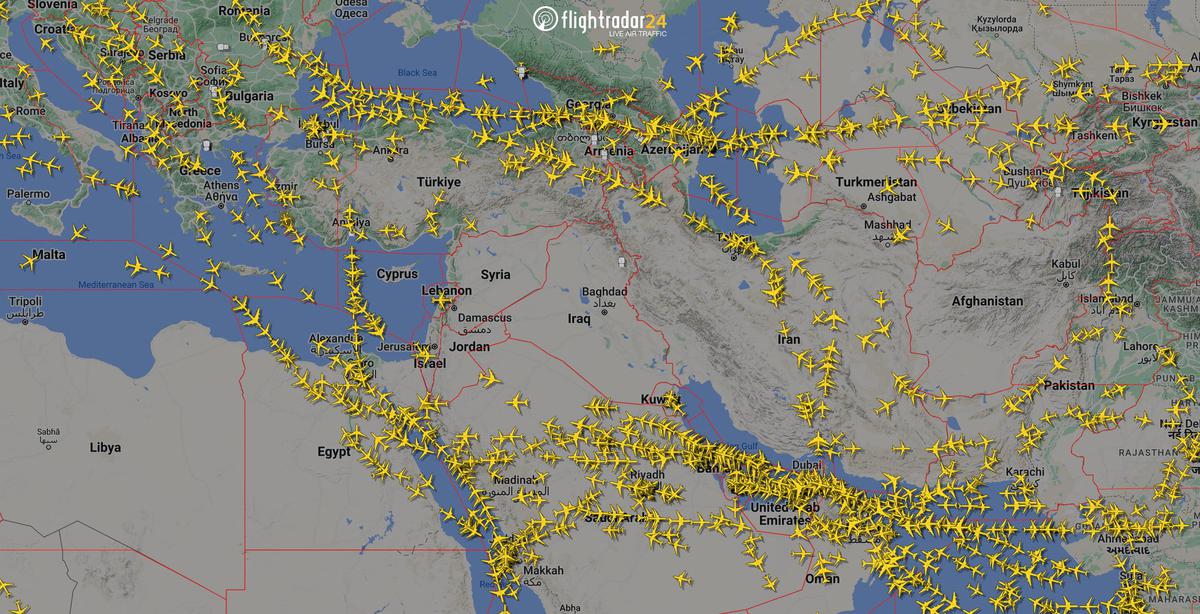
Austria confirmed it scrambled Eurofighter Typhoon jets to intercept two PC-12 turboprop aircraft linked to the U.S. that allegedly entered its airspace without authorization over Upper Austria (YouTube, US 'Punishes' EU Nation). The aircraft turned back toward Germany after the fighter jets moved in to intercept them (BA cited in search result [1]). This incident follows Vienna's denial of U.S. overflight requests weeks earlier during the Iran war, rooted in Austria's long-standing neutrality policy.
The confrontation, captured dramatically on camera, underscores immediate frictions between U.S. surveillance operations and European sovereign airspace claims.
Why it matters
Austria's neutrality, enshrined since 1955, positions it as a buffer in Central Europe, hosting UN and OSCE bodies while avoiding military alliances like NATO. U.S. surveillance flights, likely tied to monitoring Iran-related movements or broader Middle East escalations, challenge this status quo as American operations extend into neutral territories without consent. This episode arrives amid Europe's rearmament push and NATO uncertainties, where U.S. actions test alliance cohesion and individual state autonomy.
Broader geopolitical ripples include strained transatlantic trust, especially with U.S. threats of NATO withdrawal and troop reductions. It amplifies debates on European defense independence, as seen in Germany's spending hikes and France's nuclear-sharing talks, positioning such incidents as precursors to redefined power balances across the continent.
Key facts
- Two PC-12 turboprop aircraft intercepted over Upper Austria (YouTube, US 'Punishes' EU Nation).
- Austrian Eurofighter Typhoon jets scrambled for the mid-air encounter (search result [1]).
- Incident linked to prior U.S. overflight denial during Iran war (YouTube, US 'Punishes' EU Nation).
- Aircraft turned back toward Germany post-intercept (BA, search result [1]).
Analysis
This airspace violation attempt reveals deepening cracks in U.S.-European operational coordination. Austria's decisive response enforces its neutrality not as passive doctrine but active deterrence, potentially emboldening other non-NATO states like Switzerland or Ireland to assert similar boundaries. In the context of Middle East blockades and naval pressures reshaping diplomacy, such aerial incursions signal how surveillance domains are becoming contested frontiers, mirroring maritime tensions but over land and neutral skies. The U.S.-linked planes' German vector suggests basing from Ramstein or similar hubs, highlighting how alliance infrastructure enables operations that bypass individual consents.
Zooming out, the clash feeds into Europe's dual-track defense evolution: bolstering NATO's eastern flank while pursuing '360° security' approaches that include neutral actors (EU speech on Eastern Flank). With Hungary's post-Orbán shift toward Central European pacts modeled on Benelux, Austria could anchor a neutrality bloc resisting great-power overreach. This dynamic complicates U.S. strategic posture, forcing recalibration between unilateral surveillance needs and alliance maintenance amid Trump-Xi summit uncertainties and potential US-China ententes that marginalize Europe.
What to watch
- Forecasts: Austria may formalize stricter airspace protocols with neighbors, forming a Central European neutrality corridor.
- Forecasts: U.S. could escalate surveillance via drones or allies, prompting EU-wide intercept standardization.
- Forecasts: Incident fuels push for European satellite intel independence, reducing reliance on U.S. assets.